Evidence-informed guide
Circadian Rhythm 101: Why Your Internal Clock Matters for Brain Fog
Key Takeaways
- Your circadian rhythm is a natural 24-hour cycle influencing nearly every physiological process.
- The suprachiasmatic nucleus (SCN) in your brain acts as your body's master clock, primarily synchronized by light.
- Disruptions to your circadian rhythm can negatively impact sleep, mood, digestion, and crucial cognitive functions.
- Optimizing your internal clock involves consistent sleep schedules, smart light exposure, mindful eating, and regular physical activity.
- Supplements like Neuro Fortis PRO and Mind Vault can support cognitive health, which is intricately linked to a well-regulated circadian rhythm.
Understanding the Circadian Rhythm Basics: Your Body's Master Clock 🕰️
In a world that never sleeps, understanding the fundamental rhythms governing our biology has become more crucial than ever. The circadian rhythm basics reveal an intricate internal clock, a natural, internal process that regulates the sleep-wake cycle and repeats roughly every 24 hours. Far from being just about when you feel tired or awake, this profound biological rhythm impacts virtually every cell, tissue, and organ in your body, broadly influencing everything from hormone release and metabolism to cognitive function and mood. Mastering these basics is not merely academic; it's a cornerstone of holistic health and peak performance.
What Exactly Is Your Circadian Rhythm?
At its core, your circadian rhythm is a daily oscillation of biological processes. It's the reason you feel sleepy at night and alert during the day, but its influence extends far beyond mere wakefulness. Think of it as your body's personal operating system, meticulously scheduling various functions to occur at optimal times.
The Master Clock: The Suprachiasmatic Nucleus (SCN)
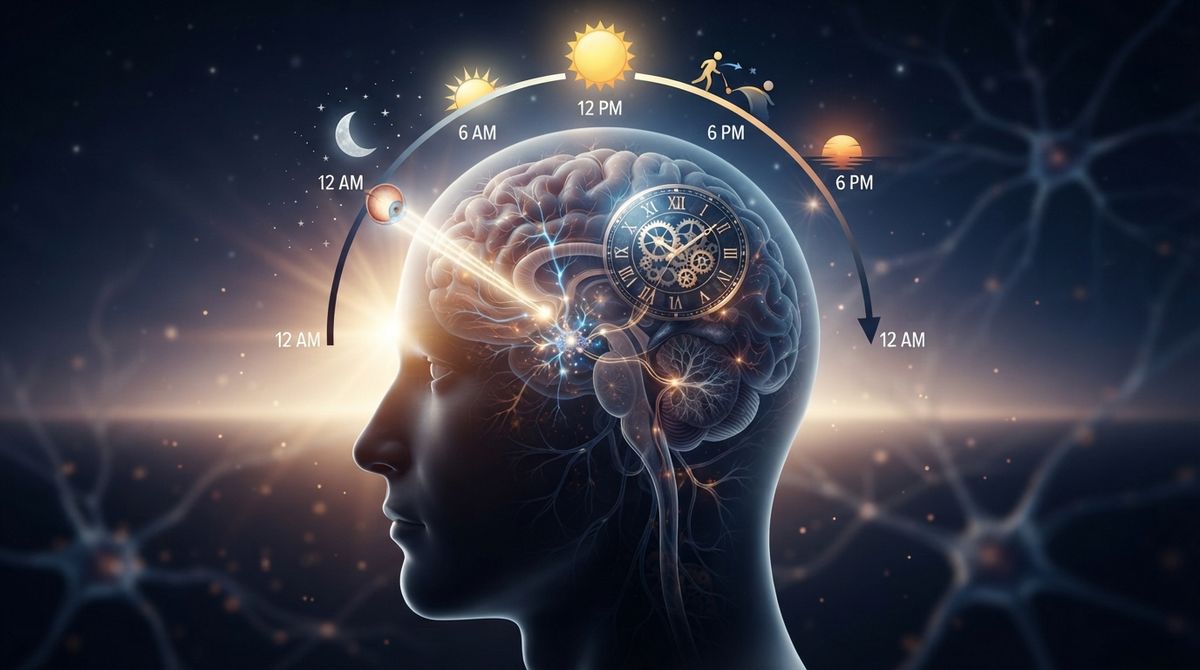
Located in the hypothalamus of your brain, the suprachiasmatic nucleus (SCN) is often referred to as your body's master clock. This tiny cluster of about 20,000 neurons receives direct input from your eyes, making light the primary synchronizer of your internal rhythm with the external world. When light hits your retina, signals are sent to the SCN, which then orchestrates the release of various hormones and neurotransmitters, effectively setting your internal clock.
Key Hormones and Their Role
Two critical hormones heavily influenced by your circadian rhythm are melatonin and cortisol.
- Melatonin: Often called the
Frequently Asked Questions
What is the circadian rhythm?
The circadian rhythm is a natural, internal 24-hour cycle that regulates various physiological processes in living beings, most notably the sleep-wake cycle.
How does light affect my circadian rhythm?
Light is the most powerful external cue that synchronizes your circadian rhythm. Exposure to bright light, especially in the morning, signals your body to be awake, while darkness in the evening promotes melatonin production, signaling sleep.
What are the signs of a disrupted circadian rhythm?
Signs of a disrupted circadian rhythm can include difficulty falling asleep or staying asleep, daytime fatigue, irritability, digestive issues, and impaired concentration or memory.
Can I reset my circadian rhythm?
Yes, you can reset or adjust your circadian rhythm through consistent habits like maintaining a regular sleep schedule, optimizing light exposure, timing meals appropriately, and incorporating regular physical activity.
How long does it take to adjust my circadian rhythm?
Adjusting your circadian rhythm can take several days to a few weeks, depending on the degree of disruption and the consistency of your efforts to realign it. Gradual changes are often more effective than drastic ones.